Short answer: Strength training improves running economy and, when done under supervision, measurably reduces injury risk. It doesn't slow runners down or add unwanted bulk when programmed correctly. Longer term, research on masters athletes suggests consistent strength and conditioning is a major factor in whether runners are still hitting the trail in their 70s and 80s, not just whether they finish this year's race.
Whether you’re training for the OC Marathon, logging miles along the Santa Ana River Trail, or just trying to keep your weekly runs pain-free around Costa Mesa, the question comes up constantly: does a strength workout for runners actually help, or does it just take energy away from running itself? Here’s what the research on running resistance training actually shows — and it applies whether your goal is this year’s race or still running at 80.
Does strength training help runners?
Yes — in two specific, measurable ways. First, resistance training improves running economy: how efficiently your body uses oxygen at a given pace. A systematic review with meta-analysis found strength training produced meaningful improvements in running economy among highly trained runners (Balsalobre-Fernández et al., 2016). A more recent meta-analysis comparing training types found heavy resistance training outperformed plyometric training for both running economy and running time-trial performance (Eihara et al., 2022).
What strength exercises should runners actually do?
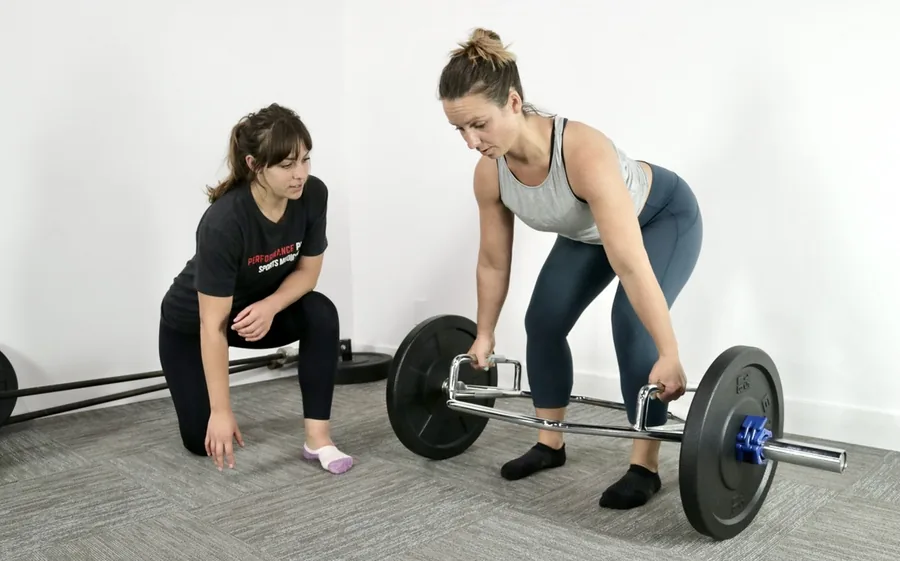
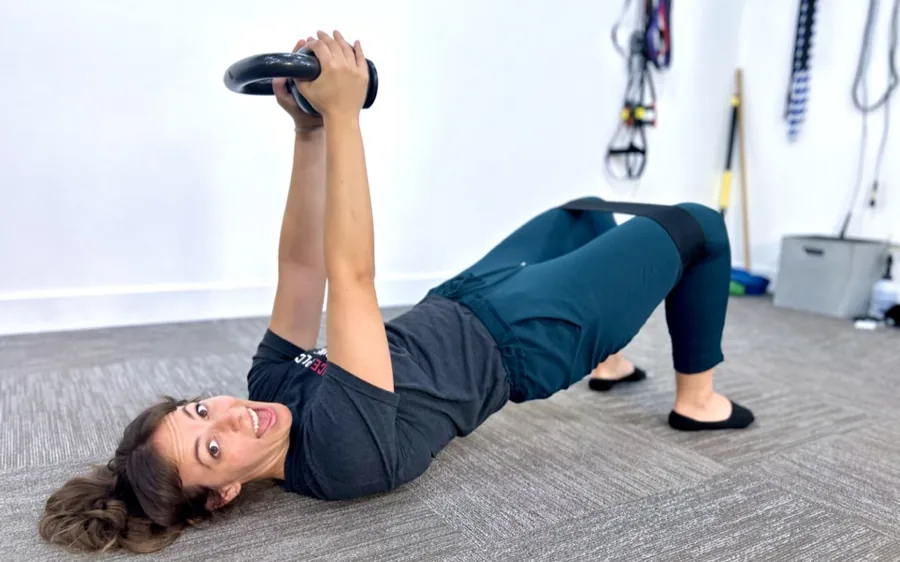
Not every strength exercise is equally useful for running. The research behind the running-economy improvements above centers on a fairly short list of compound, heavy-load movements rather than high-rep circuits or isolation work:
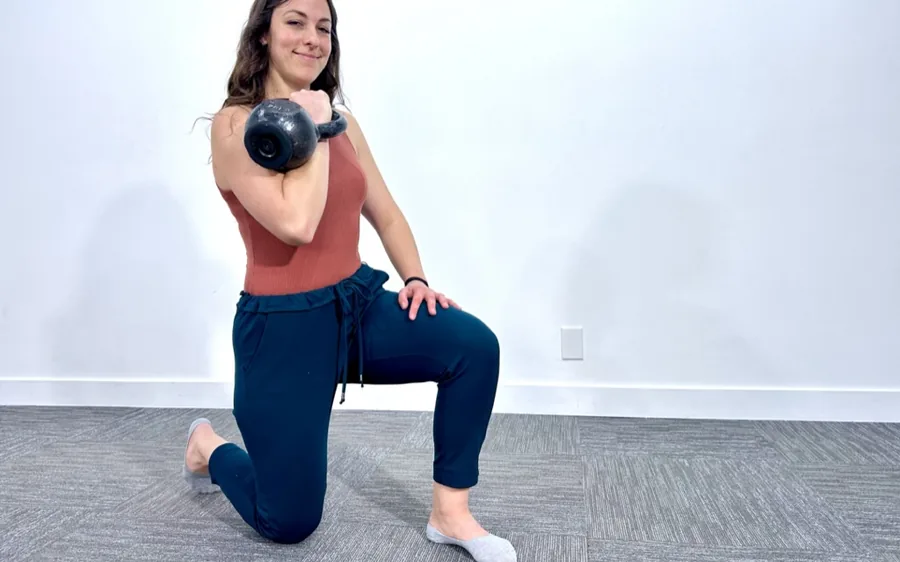
- Squats and split squats — build general lower-body force production, with split squats adding the single-leg component that mirrors a running stride.
- Deadlifts and hip hinges — directly train the posterior chain (glutes and hamstrings), which powers propulsion and is consistently undertrained by runners who only run.
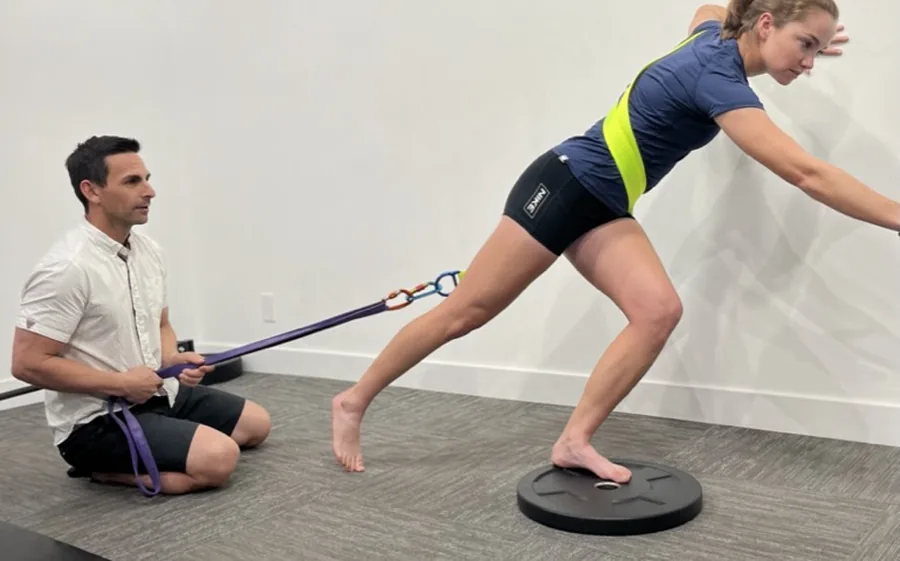
- Step-ups — single-leg strength under load, close to the mechanics of climbing terrain or pushing off the ground.
- Calf raises — the calf absorbs and returns a large share of force on every stride, and it’s easy to skip if you’re not intentional about training it.
- Core and hip stability work — planks, side planks, and anti-rotation work don’t produce force directly but keep form from breaking down as you fatigue late in a run.
The research consistently favors heavier loads at low repetitions (think 4–8 reps, not 15–20) for the running-economy benefit specifically — a bodyweight-only circuit is better than nothing, but it’s not the same stimulus.
Does strength training actually prevent running injuries?
This is where the research gets more nuanced than most articles let on — and it’s worth being straight about it. A 2024 systematic review and meta-analysis focused specifically on endurance runners found that, overall, exercise-based injury prevention programs did not produce a statistically significant reduction in running-related injuries. But a closer look at the same data found something important: when the program was supervised, injury risk was significantly lower than in runners training on their own (Wu et al., 2024).
That distinction matters. It suggests the strength work itself isn’t the variable that determines whether it protects you — consistency, correct loading, and technique under real guidance are. Separately, a broad meta-analysis across sports (25 trials, over 26,000 participants) found strength training reduced overuse injuries by close to half compared to no strength training (Lauersen et al., 2014).
Will strength training make me slower or bulkier?
No — if it’s programmed correctly. The strength work shown to help running economy in the research above uses heavier loads at low repetitions (squats, deadlifts, step-ups), not bodybuilding-style volume. This trains your muscles and nervous system to produce more force per stride without meaningfully increasing muscle mass, which is what actually improves economy rather than working against it.
How many days a week should runners strength train?
Most of the research behind these results used two sessions per week, focused on compound lower-body movements and the posterior chain — glutes, hamstrings, and calves — plus single-leg stability work that mirrors the demands of a running stride. That’s enough stimulus to see the running economy and injury-risk benefits without cutting into recovery from your actual running mileage.
Why a strength and conditioning coach makes the difference
Given that the 2024 running-specific review found supervision was the variable that separated effective programs from ineffective ones, this is precisely where working with a strength and conditioning coach changes the outcome. A trainer who can assess your current strength, program the right loads for your running volume, and correct form under fatigue is doing exactly what separated the “worked” group from the “didn’t work” group in that research.
Can strength training help me keep running into my 70s and 80s?
This is where the research gets genuinely encouraging. A landmark review of Masters athletes found that peak endurance performance holds fairly steady until around age 35, then declines modestly through the 50s and 60s, with steeper drops only after that (Tanaka & Seals, 2008). That’s a much slower decline than most people assume — and how much of it you experience isn’t entirely fixed.
A 10-year longitudinal study of male masters sprinters, aged 40 to 85 at the start, is especially telling: athletes who kept up strength training at least twice a week maintained or even improved key measures of bone strength over the following decade, while those who dropped below that threshold saw measurable bone deterioration over the same period (Suominen et al., 2021). This wasn’t a short-term study measuring a temporary effect — it followed the same people for ten years, into their 70s and 80s, and found that consistent strength training was the variable separating who kept their bone and structural strength and who didn’t.
The takeaway for a runner training in Costa Mesa today isn’t just “run your next race a bit faster.” It’s that the strength work you do in your 40s, 50s, and 60s appears to directly shape whether you’re still out on the trail at 75, or 85, and not just whether you finish this season’s races. That’s a longer-term return most runners aren’t thinking about when they skip the weight room.
If you’re a runner training around Costa Mesa or anywhere in Orange County — whether you’re logging miles on the Santa Ana River Trail, Back Bay in Newport, or the Huntington Beach boardwalk — we build strength programs specifically around your running schedule. That’s available as in-person 1-on-1 training, small group training for a lower cost with the same individualized approach, or online coaching if you’re outside the area.
A quick note
This article is educational, not medical advice. Finish Line Personal Training is a strength & conditioning coaching company, not a medical provider — we don't diagnose or treat running injuries. If you have a current injury, see a doctor or physical therapist first. If you're medically cleared to train, we're glad to build your strength program around your running.
References
- Balsalobre-Fernández, C., Santos-Concejero, J., & Grivas, G. V. (2016). Effects of strength training on running economy in highly trained runners: A systematic review with meta-analysis of controlled trials. Journal of Strength and Conditioning Research, 30(8), 2361–2368.
- Eihara, Y., Takao, K., Sugiyama, T., Maeo, S., Terada, M., Kanehisa, H., & Isaka, T. (2022). Heavy resistance training versus plyometric training for improving running economy and running time trial performance: A systematic review and meta-analysis. Sports Medicine – Open, 8(1), 138.
- Wu, H., Brooke-Wavell, K., Fong, D. T. P., Paquette, M. R., & Blagrove, R. C. (2024). Do exercise-based prevention programs reduce injury in endurance runners? A systematic review and meta-analysis. Sports Medicine, 54(5), 1249–1267.
- Lauersen, J. B., Bertelsen, D. M., & Andersen, L. B. (2014). The effectiveness of exercise interventions to prevent sports injuries: A systematic review and meta-analysis of randomised controlled trials. British Journal of Sports Medicine, 48(11), 871–877.
- Tanaka, H., & Seals, D. R. (2008). Endurance exercise performance in Masters athletes: Age-associated changes and underlying physiological mechanisms. The Journal of Physiology, 586(1), 55–63.
- Suominen, T. H., Alén, M., Törmäkangas, T., Degens, H., Rittweger, J., Heinonen, A., Suominen, H., & Korhonen, M. T. (2021). Regular strength and sprint training counteracts bone aging: A 10-year follow-up in male masters athletes. JBMR Plus, 5(7), e10513.
- Popovic, B., Popovic, D., Macut, D., Antic, I. B., Isailovic, T., Ognjanovic, S., Bogavac, T., Kovacevic, V. E., Ilic, D., Petrovic, M., & Damjanovic, S. (2019). Acute response to endurance exercise stress: Focus on catabolic/anabolic interplay between cortisol, testosterone, and sex hormone binding globulin in professional athletes. Journal of Medical Biochemistry, 38(1), 6–12.
- Scofield, K. L., & Hecht, S. (2012). Bone health in endurance athletes: Runners, cyclists, and swimmers. Current Sports Medicine Reports, 11(6), 328–334.
- Strasser, B., & Pesta, D. (2013). Resistance training for diabetes prevention and therapy: Experimental findings and molecular mechanisms. BioMed Research International, 2013, 805217.